Advancing Scientific Discovery
with AI

FirstPrinciples is a research company building AI systems for discovery in fundamental science.

Theo Collaborator

Sign up for early access to Theo Collaborator, a domain-specialized scientific workflow system. Plan, execute, and revise research without starting over.

Theo
Conjecture

Theo Conjecture, for automated conjecturing, is currently in Research Preview. Sign up to request early access.

Theo, the AI Physicist

A modular system built to reason like a physicist for AI-enabled discovery in fundamental science.

Mission

Breakthroughs in our understanding of nature have long driven progress across society. Our mission is to understand the nature of reality by advancing AI-driven discovery in fundamental science.

Bottleneck

For as long as humans have existed, we’ve always tried to understand the world around us. What we’ve learned so far is remarkable, but with progress comes increased complexity.
The growing burden of knowledge is slowing scientific progress, because human cognition can’t scale with the proliferation of information available.

Shift

The scientific method is also evolving. AI is moving from a tool to a research partner, creating a fundamental shift in how (and where) science is performed.
Academic systems are built on human-led discovery, whereas frontier AI is concentrated primarily within labs with commercial priorities. For AI to meaningfully participate in the scientific process, how it’s built (and who it’s for) matters deeply.

Stewardship

As AI becomes foundational to discovery, it must protect knowledge as a shared asset, not a proprietary advantage.
FirstPrinciples is building AI solely for fundamental research, transparent by design, and committed to knowledge as a public good.

Theo: The AI Physicist

A modular system built to reason like a physicist as infrastructure for AI-enabled discovery in fundamental science.

Core design

Specialized fine-tuned models across physics domains; 120B+ parameters; trained on curated scientific corpus.

Key capabilities

Hypothesis generation, symbolic reasoning, tool integration, validation loops, Dynamic Research Objects (DROs) for reproducible steps.

Progress highlights

Early self-guidance achieved to move from question → hypothesis → evaluation; 5 specialized models; 4 tools for scientific rigor; internal experiments running on quantum information questions.

How it's different

Model-layer innovation for rigorous, interpretable reasoning; built with the scientific community to ensure alignment with the scientific process.

5

Fine-tuned specialized models

120B+

Parameters

3M+

Trained on specialized scientific corpus of 3M+ high-quality scientific papers

Bottleneck

For as long as humans have existed, we’ve tried to understand the world around us. What we’ve learned so far is remarkable, but with progress comes increased complexity.
This is creating an emerging structural challenge where neither human cognition nor existing research systems are able to scale with the growing volume of scientific knowledge being produced.

Shift

The scientific method is also evolving. AI is moving from a tool to a research partner, creating a fundamental shift in how (and where) science is performed. 
Academic research remains structured around human-led workflows, while advances in AI are largely developed outside of systems designed specifically for scientific discovery. The result is a growing gap between how science is conducted and the systems now shaping its future.

A New Approach

Closing this gap requires rethinking how discovery is carried out, not just applying AI to existing workflows. 
FirstPrinciples is a research company focused on advancing AI-enabled discovery in fundamental science. We are building systems centred around the scientific method, enabling new ways to explore the world around us.

Our Core Pillars

Scientific advancement

We enable new modes of discovery by building AI systems that contribute to rigorous, original scientific research.

Shared understanding

We aim to deepen humanity’s understanding of the universe and contribute to shared knowledge that supports long-term progress.

Responsible AI infrastructure

We work closely with the global scientific community to build AI infrastructure that can contribute meaningfully to scientific progress.

Institutional innovation

We are an independent, global research company building AI systems designed for scientific discovery and grounded in the standards of rigorous research.

Explorations in Science and AI

Read more

Lab Notes: CiteVerify - Fake citation detection and evidence verification for AI research
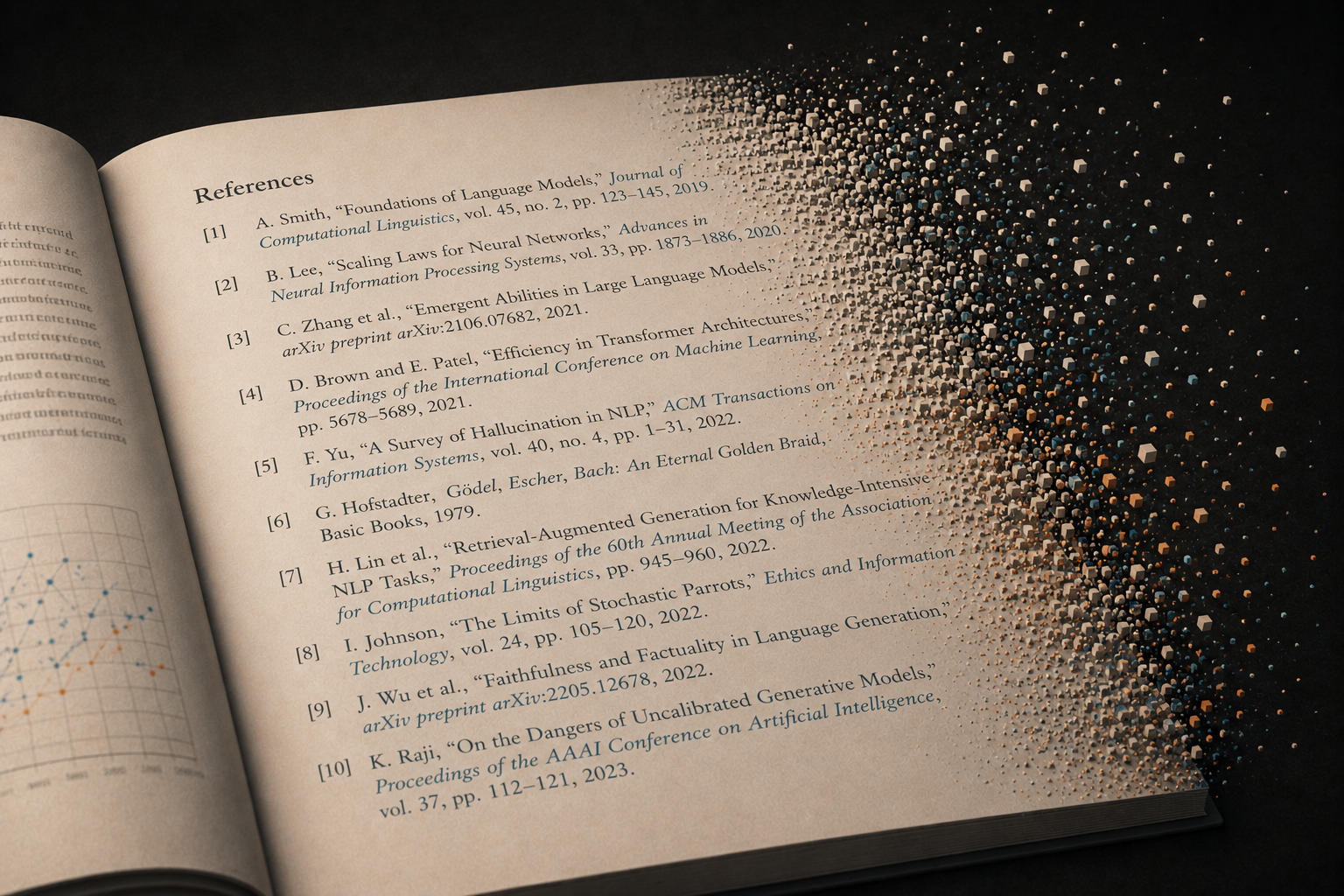
Scientific writing has always relied on the implicit contract that claims must remain traceable to evidence. Large language models complicate that relationship. Modern systems can generate reports that appear rigorous and extensively sourced while quietly introducing fabricated citations. CiteVerify is FirstPrinciples’ answer to the rise of fake citations.

Automated conjecturing: How machines are exploring mathematical structure
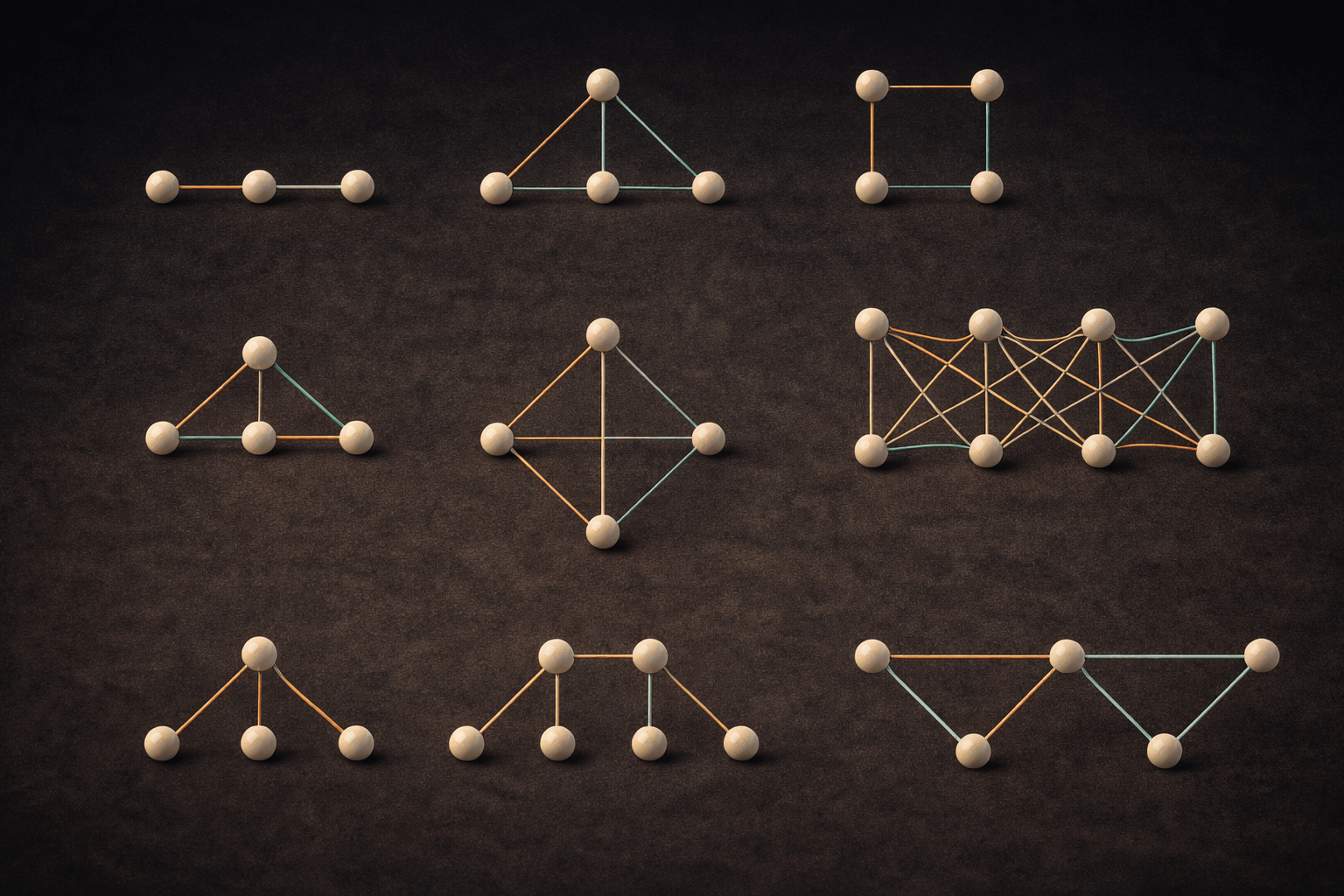
Before a theorem can be proved, someone has to decide what is worth proving. For decades, the formation of a conjecture remained largely outside the reach of machines. In Automated Conjecturing with TxGraffiti, Randy Davila explores how that boundary has shifted.

Lab Notes: Teaching models to reason a little better

A recent recap of work at FirstPrinciples, from fine-tuning and RLVR to ensembles and 122B-scale models. We’re beginning to clarify what improves scientific reasoning, and these are our notes.

Between tools and theory: Reflections from the Machine Learning and the Physical Sciences workshop, NeurIPS 2025

A reflection on ML4PS 2025, where researchers in physics and machine learning grappled with the role AI should play in scientific discovery, and what it would take to move from process acceleration toward deeper scientific insight.

The AI Physicist reaches its first autonomy milestone (ahead of schedule)

The team at FirstPrinciples has reached the AI Physicist’s first autonomy milestone ahead of schedule, assembling the early loops of a system that will guide its own scientific reasoning from research to hypothesis and beyond.