Curious about Theo? Join our live demo September 3rd 11 AM - 12 PM (ET)
Sign Up

Verifiable AI forScientific
Research

Explore, execute, and verify complex research with AI built for rigorous work.

Hello, I'm Theo, your research collaborator.

WHERE WOULD YOU LIKE TO BEGIN?
DESCRIBE A RESEARCH PROBLEM
Tell Theo about a question, gap, or limitation you want to explore.
IMPORT EXISTING WORK
Bring in a paper, dataset, or notes you already have.
EXPLORE SUGGESTED DIRECTIONS
Get research directions Theo tailors to your profile.
RESEARCH PROBLEM
Fidelity ceiling for a surface-code logical qubit at p = 1e-3. Which assumption breaks first?
DERIVATION
12 steps, each traceable to source
EXPLORATION
4 noise models branched in parallel
ASSUMPTION FLAGGED
Markovian bath breaks first, not p
Describe a question, gap, or limitation…
0.00s landscape preview controls

Bottleneck

For as long as humans have existed, we’ve always tried to understand the world around us. What we’ve learned so far is remarkable, but with progress comes increased complexity.
The growing burden of knowledge is slowing scientific progress, because human cognition can’t scale with the proliferation of information available.

Shift

The scientific method is also evolving. AI is moving from a tool to a research partner, creating a fundamental shift in how (and where) science is performed.
Academic systems are built on human-led discovery, whereas frontier AI is concentrated primarily within labs with commercial priorities. For AI to meaningfully participate in the scientific process, how it’s built (and who it’s for) matters deeply.

Stewardship

As AI becomes foundational to discovery, it must protect knowledge as a shared asset, not a proprietary advantage.
FirstPrinciples is building AI solely for fundamental research, transparent by design, and committed to knowledge as a public good.

AI systems built for rigorous research

Theo

The AI workspace for scientific research
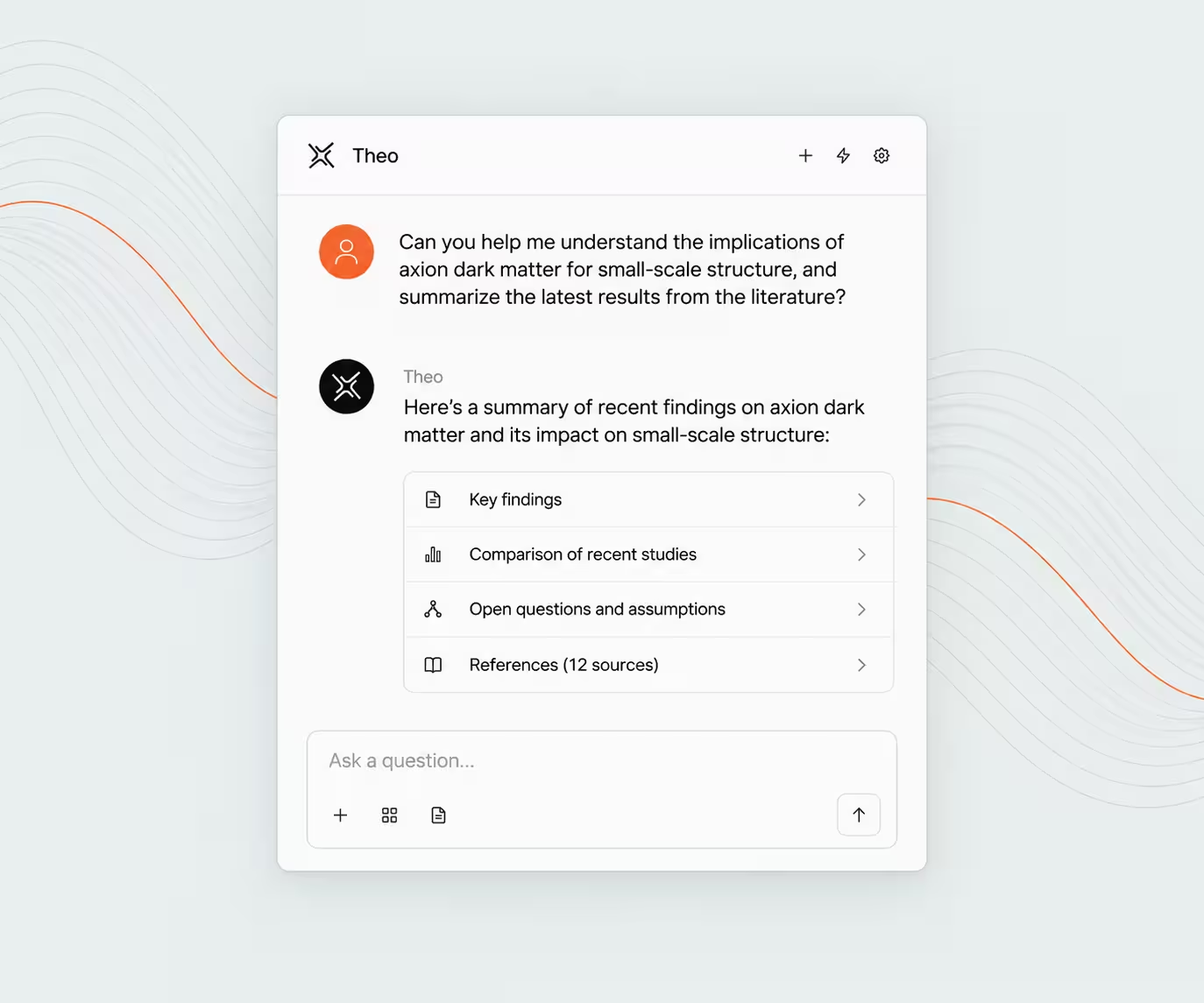
Plan and execute complex research, work across multiple AI models and scientific tools, revisit assumptions without starting over, and trace how results were produced.
Explore Theo
SPECIALIZED AI
Backed by domain-specialized AI
ONE WORKSPACE
Multiple models in one workspace
TRACEABLE
Verifiable results
Ask a research question…
0.00s landscape preview controls

From Open Question to Verified Result

Explore

Investigate difficult questions, synthesize scientific knowledge, and develop structured research plans.

Execute

Work across models, code, symbolic systems, scientific software, and domain-specific tools in a single research workflow.

Verify

Test assumptions, compare approaches, validate outputs, and preserve the evidence and provenance behind every result.

Our Core Pillars

Scientific advancement

We enable new modes of discovery by building AI systems that contribute to rigorous, original scientific research.

Shared understanding

We aim to deepen humanity’s understanding of the universe and contribute to shared knowledge that supports long-term progress.

Responsible AI infrastructure

We work closely with the global scientific community to build AI infrastructure that can contribute meaningfully to scientific progress.

Institutional innovation

We are an independent, global company building AI systems designed for scientific discovery and grounded in the standards of rigorous research.

Built for Trusted Research

FirstPrinciples builds AI systems designed for complex technical work - combining domain-specialized models, scientific tools, structured research workflows, and verification.

Grounded and traceable

Keep research connected to its underlying assumptions, evidence, methods, and provenance - not just the final AI-generated answer.

Science-native

Work with AI systems designed around scientific reasoning and the tools, workflows, and standards researchers already use.

Model-independent

Use specialized Theo models alongside leading frontier models, comparing approaches rather than depending on a single system.

Built for organizations

Bring AI into research environments with the control, security, and deployment flexibility required for sensitive scientific work.

10+

Fine-tuned specialized models

8B-1T+

Parameter models

Bottleneck

For as long as humans have existed, we’ve tried to understand the world around us. What we’ve learned so far is remarkable, but with progress comes increased complexity.
This is creating an emerging structural challenge where neither human cognition nor existing research systems are able to scale with the growing volume of scientific knowledge being produced.

Shift

The scientific method is also evolving. AI is moving from a tool to a research partner, creating a fundamental shift in how (and where) science is performed. 
Academic research remains structured around human-led workflows, while advances in AI are largely developed outside of systems designed specifically for scientific discovery. The result is a growing gap between how science is conducted and the systems now shaping its future.

A New Approach

Closing this gap requires rethinking how discovery is carried out, not just applying AI to existing workflows. 
FirstPrinciples is a research company focused on advancing AI-enabled discovery in fundamental science. We are building systems centred around the scientific method, enabling new ways to explore the world around us.

Research is how we build better products

Explore our research

AI system 'Theo Conjecture' solves 35-year-old math conjecture, finds a term no one predicted

An automated discovery system built at FirstPrinciples by Randy Davila has proven a 1989 prediction by Paul Erdős and William Staton linking prime numbers to the Riemann zeta function, and uncovered a second mathematical term that had gone unnoticed for decades.

Lab Notes: CiteVerify - Fake citation detection and evidence verification for AI research
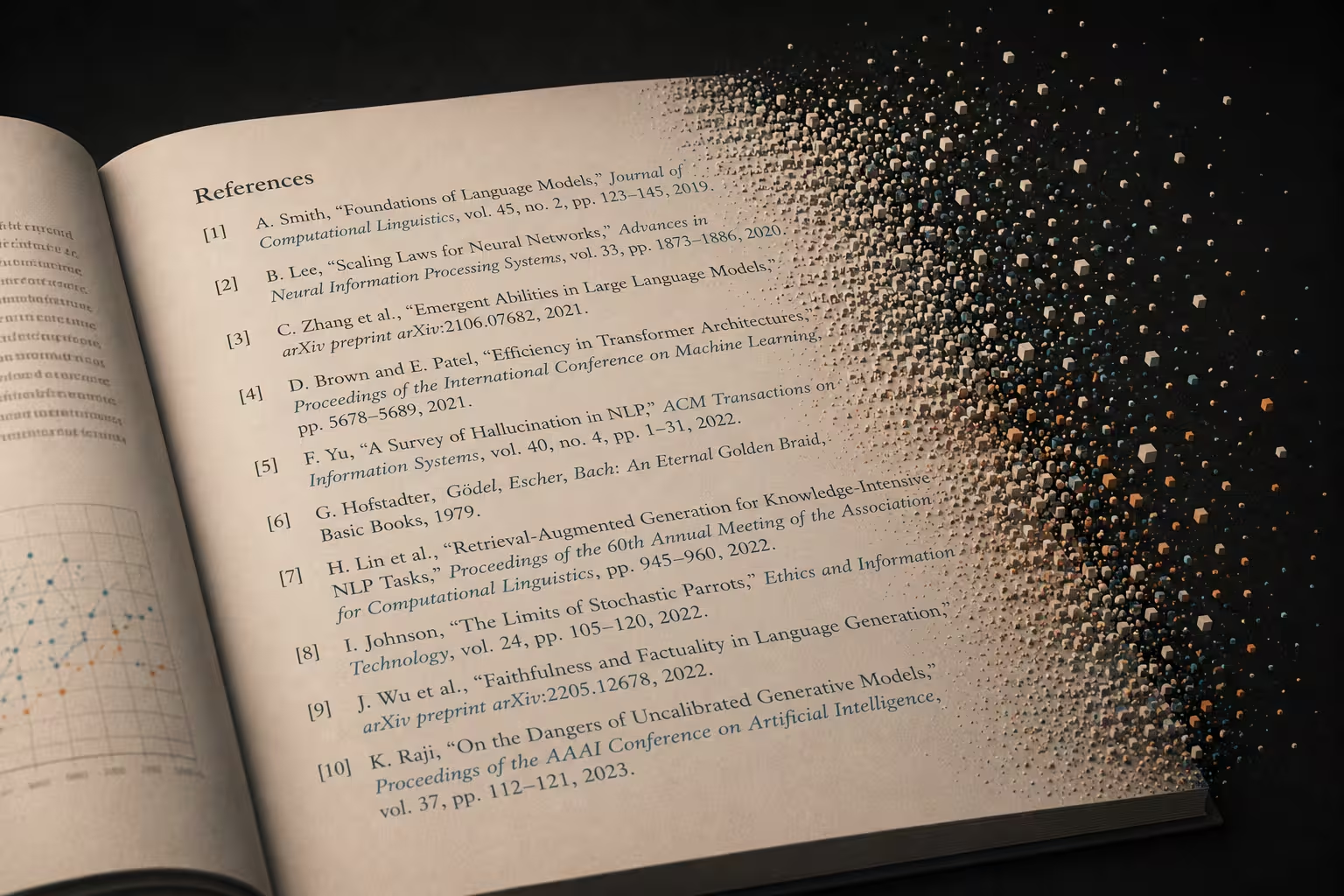
Scientific writing has always relied on the implicit contract that claims must remain traceable to evidence. Large language models complicate that relationship. Modern systems can generate reports that appear rigorous and extensively sourced while quietly introducing fabricated citations. CiteVerify is FirstPrinciples’ answer to the rise of fake citations.

Automated conjecturing: How machines are exploring mathematical structure
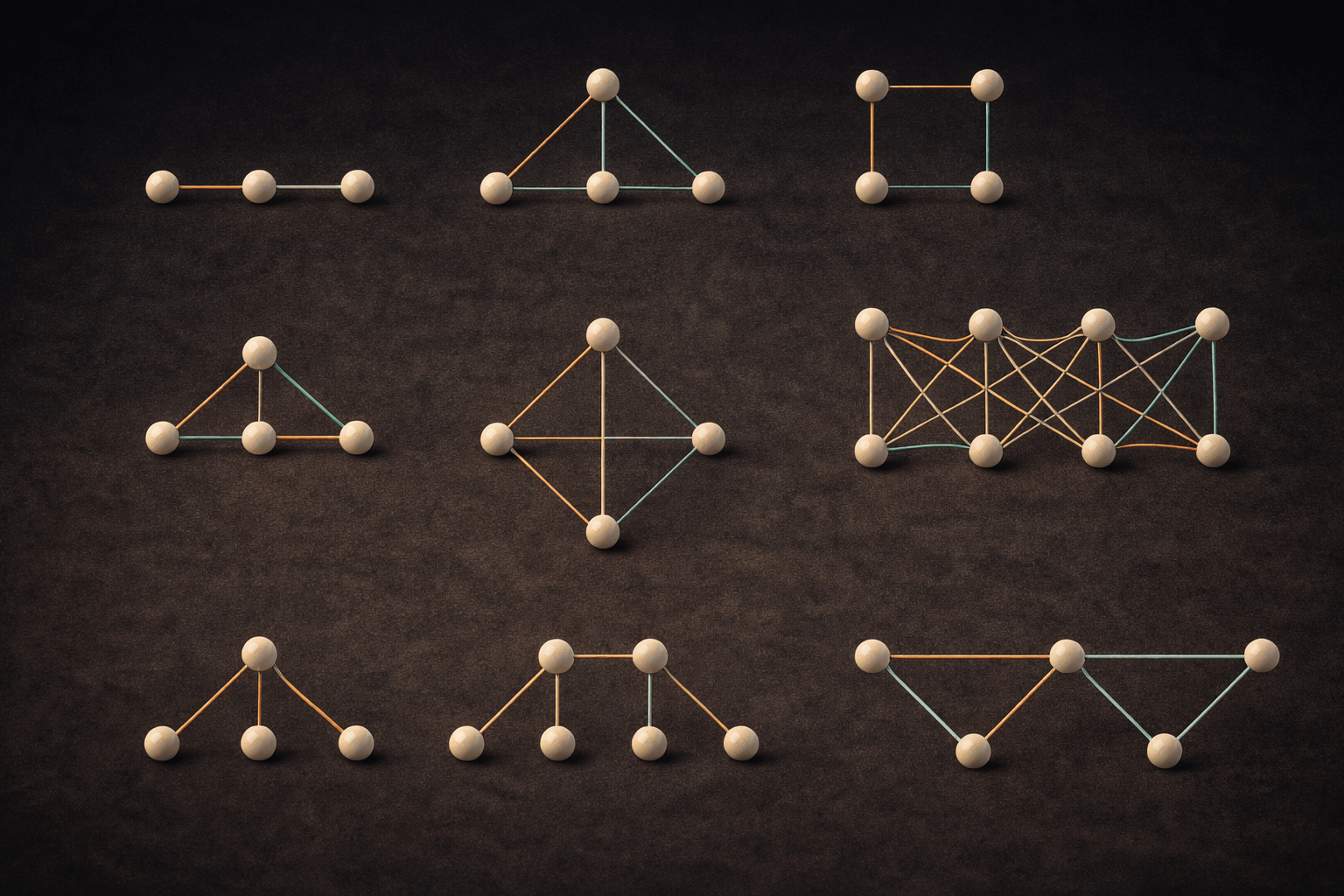
Before a theorem can be proved, someone has to decide what is worth proving. For decades, the formation of a conjecture remained largely outside the reach of machines. In Automated Conjecturing with TxGraffiti, Randy Davila explores how that boundary has shifted.

Lab Notes: Teaching models to reason a little better

A recent recap of work at FirstPrinciples, from fine-tuning and RLVR to ensembles and 122B-scale models. We’re beginning to clarify what improves scientific reasoning, and these are our notes.

Between tools and theory: Reflections from the Machine Learning and the Physical Sciences workshop, NeurIPS 2025

A reflection on ML4PS 2025, where researchers in physics and machine learning grappled with the role AI should play in scientific discovery, and what it would take to move from process acceleration toward deeper scientific insight.
Verifiable AI for your hardest research problems

See how FirstPrinciples and Theo can support your research team.